What Might Be Next In The data privacy compliance India
Wiki Article
How DPDPA Compliance Software Enables Businesses to Improve Data Privacy and Regulatory Readiness
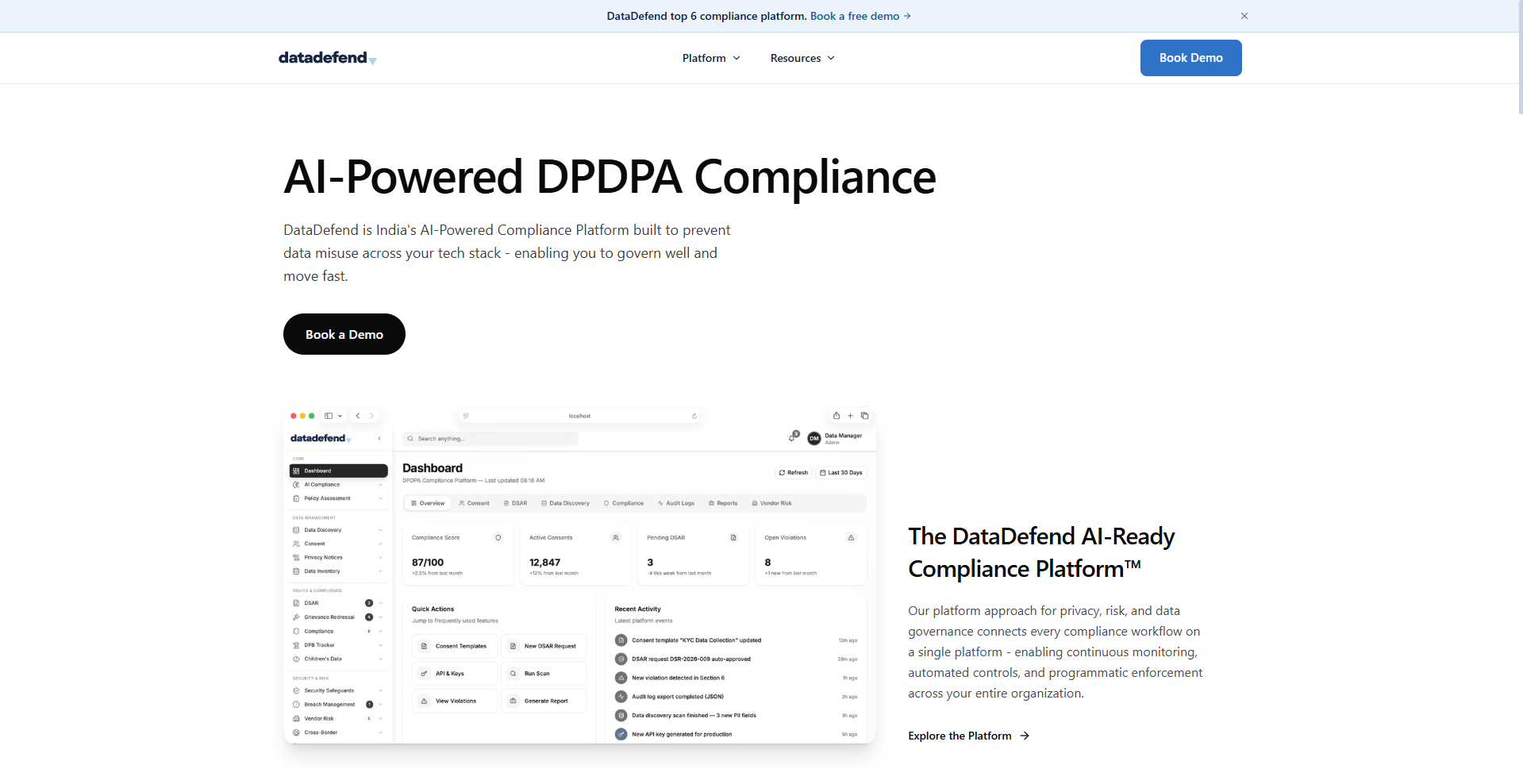
As businesses continue to depend on digital platforms for collecting, processing and storing personal data, maintaining responsible data practices has become essential. The introduction of the Digital Personal Data Protection Act compliance framework has encouraged organisations to establish transparent policies, stronger security measures and accountable data governance. Consequently, companies across sectors are adopting DPDPA compliance software to simplify regulatory processes and enhance trust among customers. Solutions such as Datadefend support organisations by bringing together privacy management, consent tracking, automated workflows and risk assessment within a single platform. With regulations constantly evolving, adopting effective DPDPA compliance practices ensures businesses remain prepared while protecting sensitive personal information.
Why DPDPA Compliance Matters for Modern Businesses
The Digital Personal Data Protection Act establishes responsibilities for organisations that collect or process personal data. Any organisation dealing with customer, employee or partner data must ensure information is collected lawfully, processed responsibly and safeguarded from unauthorised access. Meeting compliance requirements involves more than security measures, as organisations must maintain records, respond to requests and show accountability throughout the lifecycle of data.
Manual compliance approaches often become challenging as organisations grow. Data may be spread across various systems, departments and cloud environments, making full visibility difficult to achieve. Modern DPDPA compliance software centralises these activities, reducing administrative effort while improving consistency and operational efficiency.
Enhancing Trust with Efficient Consent Management
One of the key principles of privacy regulations is obtaining and managing user consent transparently. Organisations must clearly communicate how personal data will be used while allowing individuals to provide, withdraw or update their preferences at any time. A reliable consent management platform India enables organisations to maintain accurate records of customer permissions and ensures consent remains current throughout every interaction.
Automation in consent management minimises the risk of outdated records, inconsistent workflows or missing documentation. This approach enhances customer experience by giving individuals more transparency and control over their personal information. Transparent practices help organisations boost customer confidence while minimising compliance-related risks.
Ensuring Organisation-Wide Digital Personal Data Protection Act Compliance
Privacy obligations are usually shared across multiple departments. Teams including legal, IT, HR, marketing and customer support manage various categories of personal information. Successful Digital Personal Data Protection Act compliance depends on cross-functional collaboration backed by standardised processes.
An integrated system allows all departments to maintain consistent privacy practices with central monitoring. Policies, approvals, documentation and audit records become easier to handle through automation. This unified approach helps organisations reduce duplication, improve communication and maintain accurate compliance records across the business.
Improving Data Privacy Compliance India Using Automation
As data volumes grow, automation becomes crucial for maintaining efficiency while ensuring accuracy. Modern data privacy compliance India solutions automate repetitive privacy tasks that would otherwise require significant manual effort.
Automation assists with policy management, data classification, record keeping, notifications and compliance tracking. Instead of using disconnected tools, organisations achieve ongoing visibility into their privacy framework. Automated reminders, reporting and workflow approvals also help reduce human error while ensuring important compliance activities are completed on time.
Reducing administrative burden allows organisations to focus more on strategic governance and continuous improvement.
Handling Data Subject Requests Efficiently with DSAR Automation
People increasingly expect easy access to their personal data. Organisations must be ready to respond promptly when individuals request access, updates or deletion of their data. Managing such requests manually can be time-consuming, especially for organisations with large data volumes.
DSAR automation simplifies these tasks by locating relevant data across systems, coordinating reviews and documenting each step. Automation reduces response times, ensures consistency and maintains detailed audit trails.
Efficient handling of data subject requests demonstrates organisational accountability while supporting regulatory obligations and improving customer satisfaction.
Enhancing Website Privacy with Cookie Consent Management
Websites commonly use cookies and related technologies to enhance functionality, analyse performance and personalise experiences. Organisations must provide transparency regarding these technologies while allowing visitors to make informed decisions about their preferences.
Modern cookie consent management solutions display configurable consent notices, record visitor preferences and ensure tracking technologies operate according to user choices. Organisations gain centralised control over consent records while simplifying website compliance processes.
Effective cookie management also contributes to stronger customer relationships by demonstrating respect for individual privacy preferences throughout digital interactions.
Managing Third-Party Risks Using Vendor Risk Management
Organisations often depend on external providers for cloud, payments, support, analytics and development services. While these partnerships improve operational efficiency, they may also introduce additional privacy and security risks if third parties fail to maintain appropriate safeguards.
Robust vendor risk management software enables organisations to assess vendor security practices, track compliance and document risks across the lifecycle. Automation, regular reviews and centralised records simplify oversight and support better procurement decisions.
A well-defined vendor risk programme minimises exposure to security issues while enhancing resilience.
Advantages of Integrated Data Protection Software India
Managing privacy through multiple disconnected tools often creates unnecessary complexity. Businesses benefit significantly from adopting integrated data protection software India that combines multiple compliance functions within a single environment.
Centralised platforms provide consistent policy enforcement, unified reporting, simplified audits and improved visibility across organisational data assets. Users benefit from real-time dashboards, automation and comprehensive records that enhance efficiency and compliance readiness.
Integrated platforms enhance collaboration across departments, enabling privacy, legal and business teams to align more effectively.
Preparing for Long-Term Privacy Governance
Privacy laws continue to change alongside technology and evolving customer expectations. Organisations that treat compliance as an ongoing governance programme rather than a one-time project are better positioned for sustainable growth.
Effective privacy programmes involve policy reviews, employee training, ongoing monitoring and regular risk assessments. Modern platforms enable these processes through automation, reporting and flexible compliance management tools.
Businesses that establish mature governance frameworks today create stronger operational resilience while improving stakeholder confidence for the future.
Conclusion
Adopting strong DPDPA compliance strategies vendor risk management software is now a key priority for organisations focused on protecting data and ensuring regulatory readiness. Solutions like Datadefend enable organisations to streamline privacy management with integrated tools such as DPDPA compliance software, consent management platform India, DSAR automation, cookie consent management, vendor risk management software and complete data protection software India. By integrating automation, accountability and governance, organisations can enhance efficiency while building long-term trust with customers and stakeholders. Report this wiki page